
Development · E-commerce development
E-commerce development for stores that sell anywhere.
Shopify, Shopify Plus, WooCommerce or a headless storefront: we pick the platform that fits how you sell, then build the store, the integrations and the checkout around it.
In short
What is e-commerce development?
E-commerce development is building and connecting the systems behind an online store. technocity builds stores on Shopify, Shopify Plus, WooCommerce and headless stacks such as Next.js with Shopify, Medusa or commercetools, covering B2B ordering, multi-currency and multi-language selling, subscriptions, regional payment gateways, inventory and ERP sync, and platform migrations.
Sound familiar?
The problems we solve
The theme is slow and mobile shoppers drop off
Stock levels drift between the store and the ERP
Selling abroad means wrong prices or missing payment options
Trade customers still order by email and spreadsheet
What’s included
How we can help
Shopify and Shopify Plus build
A custom theme, apps and checkout extensions for brands that want speed to market and low upkeep.
Headless storefront
A Next.js front end on Shopify, Medusa or commercetools for full design control and very fast pages.
B2B and wholesale portal
Customer-specific price lists, quick order forms, credit terms and approval flows for trade buyers.
Platform migration
Move products, customers, orders and URLs between WooCommerce, Magento, Shopify or headless without losing search traffic.
Timelines are typical starting points. Every project is scoped with you first.
What you get
- Storefront theme or headless front end with product, collection and cart pages
- Checkout with payment gateways for each target region
- Multi-currency pricing, translations and tax settings per market
- Inventory, order and customer sync with your ERP or warehouse
- Migration scripts with URL redirect map and data checks
- Speed, tracking and checkout test report before launch
Tools and technology
How it works
From first call to results
Audit how you sell
We map channels, markets, catalogue size, B2B rules and every system the store must talk to.
Choose the platform
You get a written comparison of Shopify, WooCommerce and headless options for your case, with trade-offs.
Build and connect
Theme, checkout, payments and ERP sync are built together and tested with real orders on staging.
Migrate and launch
Data moves in rehearsed passes, redirects go live and we watch orders closely in the first weeks.
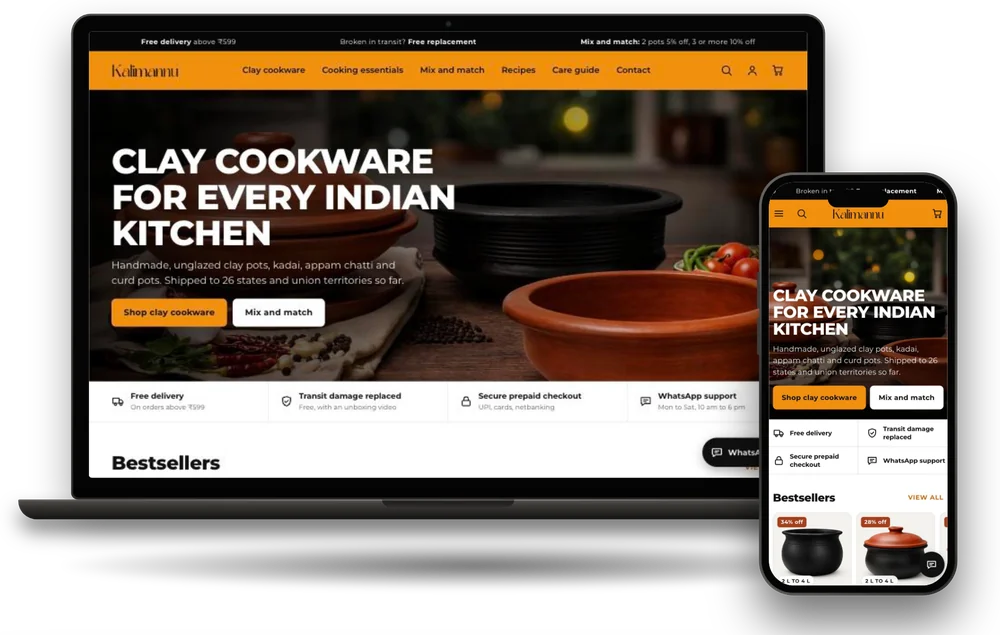
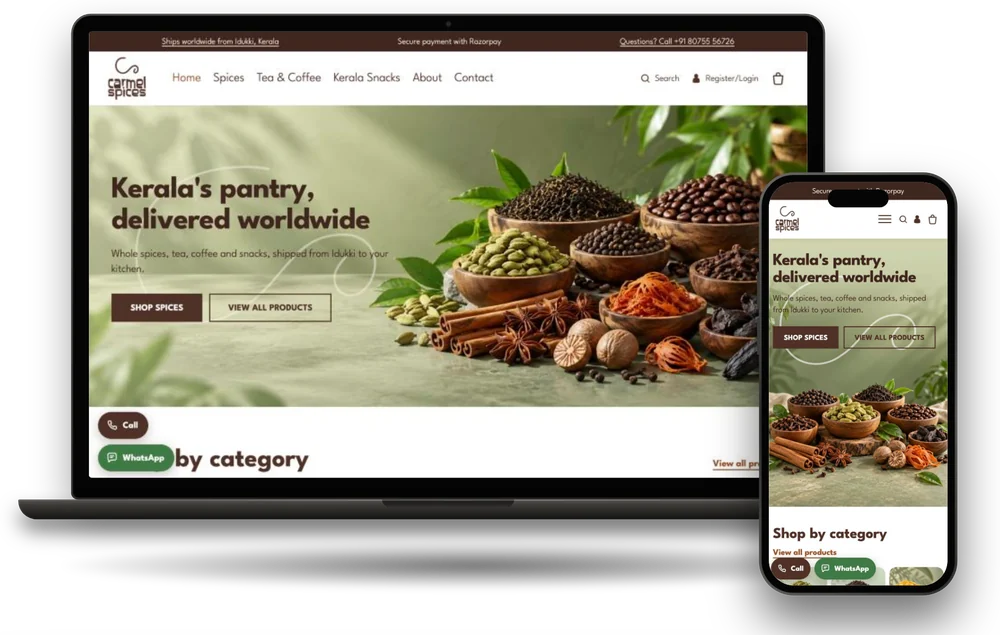
Questions
Common questions
Should I use Shopify, WooCommerce or a headless store?
Shopify suits most brands that want a reliable store with low maintenance, WooCommerce suits businesses already on WordPress that need deep content and flexible plugins, and headless suits stores that need custom design, very fast pages or complex catalogues. We recommend based on catalogue, markets, budget and in-house skills.
What is headless commerce and when is it worth it?
Headless commerce separates the storefront from the commerce engine, so a Next.js front end can sit on Shopify, Medusa or commercetools. It is worth it when you need unusual layouts, several storefronts on one catalogue, or content-heavy pages, and less so for a simple single-market shop.
Can one online store sell in several currencies and languages?
Yes, one online store can sell in several currencies and languages. Shopify Markets, WooCommerce extensions and headless setups all support local prices, translated content, regional tax rules and domain or subfolder structures per country, with hreflang tags so search engines show the right version.
Which payment gateways do you integrate for international stores?
We integrate Stripe, PayPal, Adyen, Checkout.com and Razorpay, plus local methods such as iDEAL, Klarna, Apple Pay, Google Pay, UPI and cash on delivery where they suit the market. The right mix depends on where your customers are and which currencies you settle in.
How do you migrate a store without losing SEO and orders?
A store migration keeps SEO and order history when products, customers and past orders are moved by script, every old URL gets a 301 redirect and launch happens after a full rehearsal. We compare page counts, prices and redirects before switching and monitor search traffic afterwards.
Keep exploring
Related services
E-commerce SEO
Product and category pages that rank
DevelopmentAPI and integrations
Systems that talk to each other
Digital MarketingConversion rate optimisation
More results from the same traffic
DevelopmentWeb development
Fast sites and web apps
DevelopmentMobile app development
iOS and Android apps
DevelopmentCustom software development
Software shaped to your process
